
AI Server
Advanced AI servers and cooling systems with MinebeaMitsumi Products
An overview of AI server mechanisms, applications, and components

AI servers, optimized for high-performance computing in generative AI and machine learning, are equipped
with powerful AI chips such as GPUs.
Because these servers consume significantly more power than conventional data center servers, they create
critical challenges in AI server thermal management, storage capacity, and high-speed data transmission.
MinebeaMitsumi’s advanced AI server components support the evolution of power efficiency and next-generation liquid cooling systems to meet the growing demand for modern AI data center infrastructure.
Basic Knowledge of AI servers
Difference between AI servers and General-Purpose Servers
While standard CPU-based servers handle routine tasks like web hosting, AI servers are designed for parallel processing of massive datasets.
The biggest difference is power consumption and heat generation. Managing this extreme heat requires advanced data center cooling solutions beyond traditional air cooling.
Structure and Mechanisms of AI Servers
To operate stably, high-performance computing hardware requires robust support systems. This includes powerful air or liquid cooling systems, stable power supplies, and high-speed data transmission via optical communications.
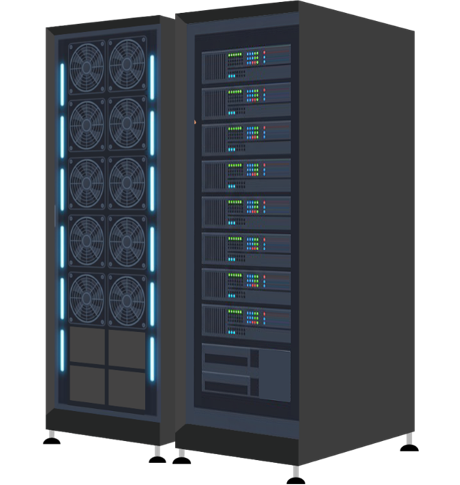
To safely house heavy, high-heat AI servers, modern server racks provide advanced infrastructure for efficient rack-wide airflow management and massive power distribution.
Applications and Utilization Areas
AI servers are the backbone of Large Language Models (LLMs), autonomous driving simulations, and smart factories. We are also seeing a rapid increase in edge AI servers, which process data locally and require highly compact, efficient cooling mechanisms.
Challenges of AI Servers
Addressing the immense heat generated by high-performance AI chips and building liquid cooling systems are urgent priorities. Furthermore, total system optimization is required, including securing zero-latency, high-speed data transmission and high-capacity storage.

Thermal Management
AI chips generate enormous heat, exceeding conventional limits. The industry is rapidly adopting high-performance air-cooling and liquid cooling systems.

Building Liquid Cooling Systems
Since water and electricity coexist, rigorous leak management and high-precision sensors are essential for safety.

High-Speed Data Transmission
As generative AI processes vast amounts of data simultaneously, technologies capable of high-speed, bulk data transmission are essential. Optical communication is gaining significant attention as a key technology for processing large capacities at high speeds.

Storage Capacity
As AI generates an enormous volume of data, storage systems are required to offer increasingly higher capacities.
MinebeaMitsumi Solutions Supporting AI Servers
We provide the critical AI server components needed to build reliable infrastructure:
- • Pressure Sensors & Leak Sensors for safe liquid cooling.
- • Large Fan Motors & Pump Motors tailored for extreme GPU cooling and liquid-to-air systems.
- • Server Rack Components including airflow sensors, HDD spindle motors, and optical connectors.
-

Air Cooling
-
Liquid Cooling
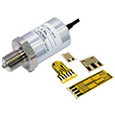
(Strain Gages)
These sensors detect the hydraulic pressure of circulating coolant using high-performance strain gages, contributing to the safe and stable operation of liquid cooling systems.
Air Cooling
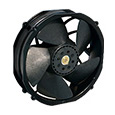
Delivering superior airflow, pressure, and efficiency, our fan motors drive performance improvements in Liquid-to-Air systems and Rear Door cooling units.
Liquid Cooling
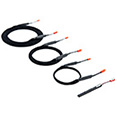
Leak Sensors
Proprietary technology enables detection of individual droplets, minimizing damage and improving system safety.
Liquid Cooling
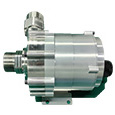
Pump Motors
Achieving high flow rates and high pressure within a 4U-sized form factor, these motors significantly enhance liquid cooling capacity.
Liquid Cooling
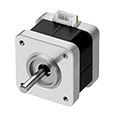
Designed for rack manifold valve opening and closing. These compact, high-torque motors deliver high-precision starting, stopping, and positioning to ensure the safe and stable operation of liquid cooling systems.
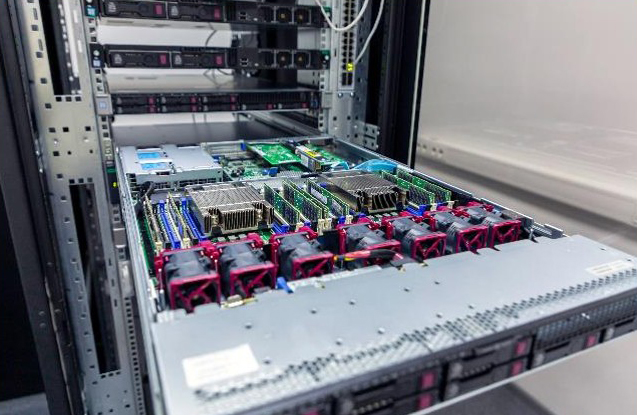
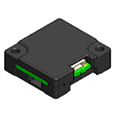
Monitors the air circulation conditions within the server.
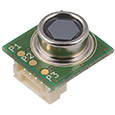
Detects abnormal heat generation within the server to prevent potential system failures.
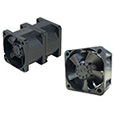
We have implemented countermeasures against windmilling and achieved high-speed rotation.
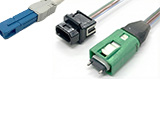
Our lineup includes multi-fiber relay connectors with integrated dust protection and shuttered optical connectors featuring automated opening and closing mechanisms.
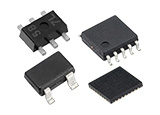
We provide a comprehensive range of power management solutions, including LDOs for voltage stabilization and reset ICs for system monitoring and protection.
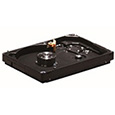
HDD Spindle Motors
Achieving high-precision rotational performance through the integration of our in-house fluid dynamic bearings (FDBs).
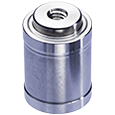
Pivot Assemblies
Delivering high-performance Pivot Assemblies for HDD arms with optimized preload management using in-house bearings, ensuring zero axis runout.
Motor Products: The Core of Cooling Systems
The performance of motors that control airflow and coolant circulation—the core elements of cooling—directly impacts server reliability and power efficiency. Our high-efficiency fan motors and pump motors for liquid cooling ensure exceptional thermal management even under severe heat conditions.
Counter-Rotating Fans
Cooling high-power GPUs requires exceptional thermal performance.
By aligning two fans and
rotating them in opposite directions, these units generate powerful static pressure with highly
directional airflow.
Large Fan Motors
As cooling units increase in size, there is a growing demand for larger, high-efficiency fan motors to match these scaled-up systems.
Pump Motors
Liquid cooling systems, which provide more powerful thermal management than air cooling,
often
utilize a method where metal "cold plates" are attached directly to heat sources like GPUs to
circulate coolant.
Pump motors are an essential component for circulating this liquid through the
cold plates.
Frequently Asked Questions
Q What is the difference between air cooling and liquid cooling in AI servers?
A
Air cooling uses fans to dissipate heat, while liquid cooling circulates liquid directly to high-heat chips (like GPUs) via cold plates.
As GPU cooling demands rise, liquid cooling systems are becoming the standard.
Q What are the main challenges of liquid cooling?
A
The primary challenge is preventing leaks.
Using high-reliability pump motors and instantaneous leak sensors is crucial for preventing hardware failure.
Q What is an edge AI server?
A
It refers to an AI server installed near the actual site where data is generated, like self-driving cars or smart factories, instead of large cloud data centers.
Since data does not travel to far-off data centers, it allows for real-time processing without communication lag. Nevertheless, because these units are often placed in limited spaces, smaller and high-efficiency cooling structures are essential.
Q How can data centers improve power efficiency?
A
It is effective to make the "server cooling system," which has the largest power consumption, more efficient.
Server cooling accounts for 30-40% of data center power use. Upgrading to high-efficiency motors, like counter-rotating fans, drastically improves overall power efficiency.
Contact Us
Please click the inquiry type below according to your question. Each product / sales representative will respond to you.


