
Drone
Stable Drone Flight with MinebeaMitsumi Products
An overview of drone mechanisms, applications, and
components

The term "drone" refers to Unmanned Aerial Vehicles (UAVs) capable of remote or autonomous flight. In recent years, the use of industrial drones to improve business and operational efficiency has expanded well beyond recreational applications.
Although increasingly common in logistics, surveying, and inspection, drones face challenges like maintaining stability in severe conditions and preventing equipment failure. This guide details how MinebeaMitsumi's technological solutions, including high-efficiency, quiet motors and dust- and moisture-proof bearings, address these issues, highlighting their specific advantages and applications.
Basic Knowledge of Drones
Drone Structure and Mechanisms
Standard drones (multicopters) perform complex flight operations—including ascending, descending, reversing, and turning—through the independent rotation of several propellers. To maintain flight stability, the system dictates instantaneous adjustments to the rotational speed of each motor. Gyro, acceleration, and pressure sensors continuously supply data to the flight controller, enabling it to send precise commands to the motors.
For heavy-payload, long-endurance industrial drones, motors must deliver raw power while maximizing battery efficiency and minimizing noise. Additionally, bearings play a crucial role in maximizing motor performance by enabling smooth, high-speed rotation. In harsh outdoor environments, our ultra-precision ball bearings offer exceptional dust and water resistance, preventing the ingress of debris and moisture, which ensures the drone's safety and maximizes operational lifespan.
MinebeaMitsumi's product lineup extends beyond these power components. By integrating various precision parts—such as GNSS antennas for highly accurate autonomous flight and gimbal motors that absorb in-flight vibrations for clear video capture—our products ensure highly stable, high-performance drone operations.
Drone Port Mechanisms
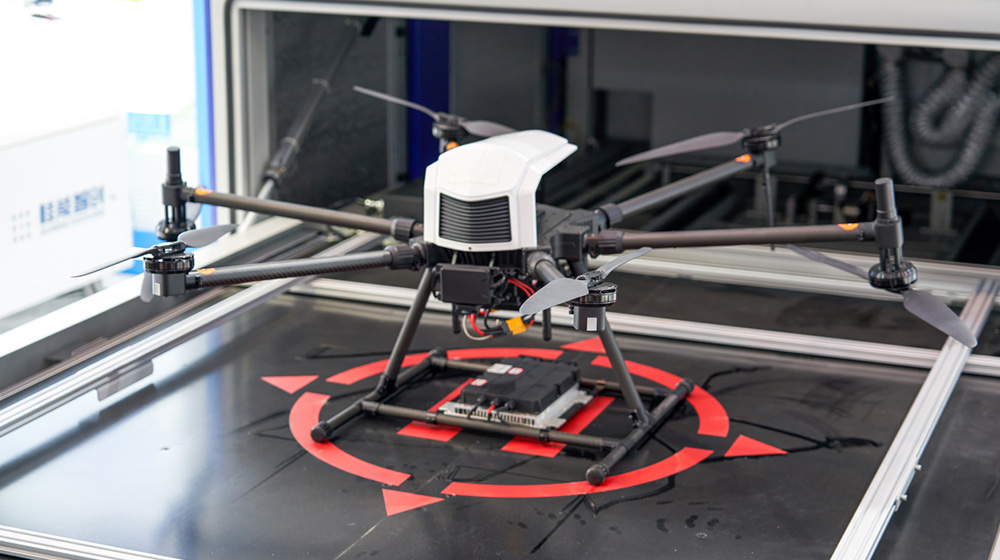
Drone ports are as essential as the drones themselves in realizing fully autonomous operations. They handle the return and storage of drones, automatic battery charging, and data transfer. This system allows operators to command multiple drones remotely over extended periods, eliminating the need to travel to the operational sites.
Drone ports combine a weather-resistant, robust housing with highly precise automated mechanical systems. For example, stepping motors and DC motors deliver the precise, powerful drive necessary for automatic operation of the heavy overhead shutters during takeoff and landing and also ensure accurate connection with charging terminals. To protect internal electronics from charging heat and direct sunlight, it is critical for outdoor-rated fan motors with water and dust resistance to operate continuously.
Safe automated flights rely on environmental sensors to track real-time weather conditions and power supply ICs to optimize system power management. MinebeaMitsumi supplies a diverse range of ultra-precision components not only for drones in flight but also for ground-based drone ports, supporting next-generation autonomous infrastructure.
Applications of Industrial (Commercial) Drones
Industrial and commercial drones are now utilized across diverse fields—including logistics, infrastructure inspection, surveying, and agriculture—serving as vital social infrastructure to enhance operational efficiency and resolve labor shortages. Particularly in logistics, driven by a severe shortage of drivers, there is an accelerating shift toward using autonomous, heavy-payload drones for urban last-mile deliveries and remote transport to mountainous and island regions.
For hazardous infrastructure inspections, such as bridges and power lines, drones utilize gimbal mechanisms to enable stable, safe, and precise assessments. Furthermore, they are indispensable for high-precision 3D surveying at construction sites and automated pesticide spraying in smart agriculture.
MinebeaMitsumi drives the evolution of drones by supplying a wide array of ultra-precision components for propulsion, control, and sensing. By integrating our advanced technologies—such as highly efficient, low-vibration brushless motors, highly dust-resistant bearings, and high-precision GNSS antennas—we ensure safe, stable, and extended flights even in harsh environments.
Challenges of Commercial Drones
Autonomous Operations
Operations such as charging, battery replacement, anomaly detection, and data uploading/downloading must be fully automated at the drone port. Additionally, there is an increasing demand for smarter and faster flight control and data analysis, powered by AI.

Improving Operational Efficiency
By utilizing drone ports, operators can manage multiple drones without being physically present on-site. This centralized control significantly enhances operational efficiency.

Ensuring Flight Safety
To enable Beyond Visual Line of Sight (BVLOS) operations—where the pilot operates the drone without maintaining a direct line of vision—it is essential to detect positioning information with high precision.
MinebeaMitsumi Solutions Supporting Commercial Drones
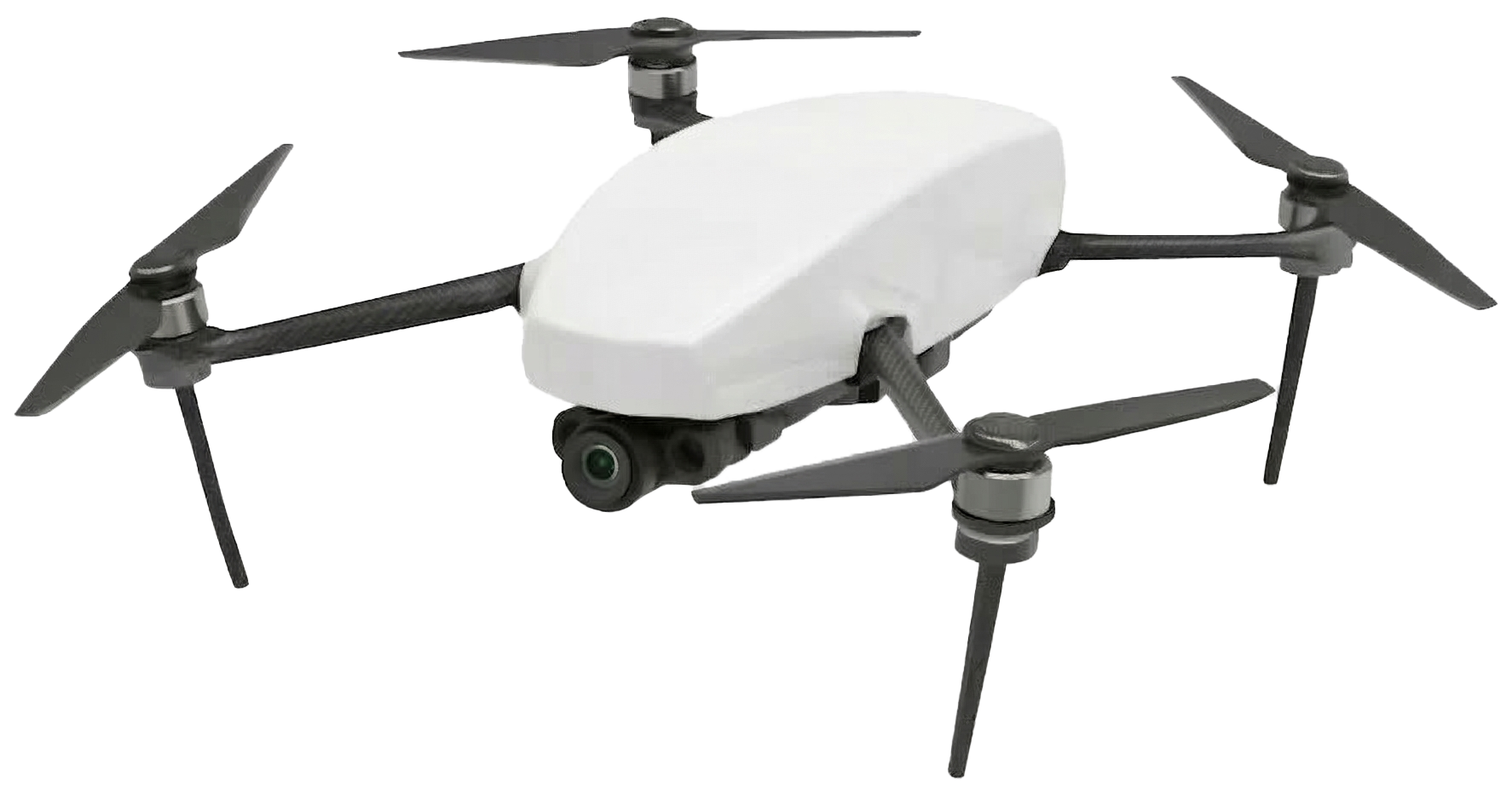
Our diverse product lineup ensures stable drone operations, including high-efficiency, low-vibration brushless DC motors for propellers, dust-resistant bearings, and motors engineered for drone and charging port shutters.
Drone
Brushless Motors for Drone Propellers
Our unique magnetic structure achieves high efficiency and low vibration, contributing to enhanced flight stability and noise reduction.
Built on our expertise in the automotive sector, these antennas offer high reliability, superior quality, and exceptional environmental resistance. Supporting L1, L2, and L6 frequency bands, they enable high-precision positioning.
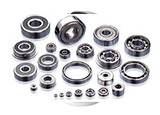
Our lineup ranges from high-dustproof bearings for propellers to ultra-miniature bearings designed for camera stabilizers.
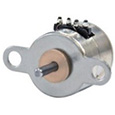
Compact and high-torque, these motors meet the stringent weight and space constraints unique to drone-mounted equipment.
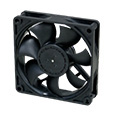
To minimize the impact on the drone's overall weight, our compact fan motors are utilized for efficient cooling of the main circuit boards.
These ICs control overcharge, over-discharge, and overcurrent to prevent ignition and overheating, ensuring the highest level of battery safety.
Our lineup includes LDO regulators for power stabilization and Reset ICs, providing a reliable and steady power supply for complex drone systems.
Drone Ports
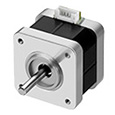
A wide range of motor options enables optimal selection for various drone port applications, such as shutter opening/closing mechanisms and charging ports.
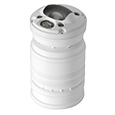
Environmental Sensors
Leveraging MEMS and optical technologies, these ultra-miniature sensors provide precise weather and atmospheric monitoring for drone operations.
Designed for power supply heat dissipation, these fan motors feature potting treatment for superior waterproofing and dustproofing, ensuring reliable performance in demanding outdoor environments.
Our lineup includes LDO regulators for power stabilization and Reset ICs, providing a reliable and steady power supply for complex drone systems.
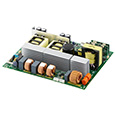
Backed by a proven track record in the 5W to 400W range, custom design (ODM) services provide solutions for specific size and form factor requirements.
High-Performance Brushless DC Motors Optimized for Drone Applications
Low Vibration
Our ring magnet structure minimizes vibration, contributing to enhanced flight stability for drones.
Low Power Consumption
Optimized magnetic circuit design using our in-house magnets enables a highly efficient motor with reduced power consumption.
Corrosion Resistance
The motors feature our in-house corrosion-resistant bearings (Giga Protection®), utilizing materials with superior corrosion and rust resistance.
Frequently Asked Questions
QWhat is the difference between industrial (commercial) drones and standard consumer drones?
A
The primary differences are durability and payload capacity.
Consumer drones target hobbies and aerial photography, whereas industrial drones are engineered for heavy payloads and prolonged flights in harsh conditions, such as inspections and surveying. Thus, components of industrial (commercial) drones such as motors and bearings, require extreme precision and reliability.
QWhat is a drone payload?
A
Payload refers to the maximum load capacity a drone can carry.
Payload refers to the maximum load capacity a drone can carry, including the weight of cameras, sensors, and cargo. Industrial drones generally feature payloads ranging from a few kilograms to tens of kilograms. Selecting a drone with the optimal load capacity for your application is essential.
QHow long can a drone fly?
A
Hobby drones can fly continuously for 10 to 30 minutes, while industrial drones typically operate for 30 minutes to 1 hour.
Flight duration depends on the drone size, payload, and battery capacity. Industrial drones are often designed for a long time operations even with heavy payloads or high-precision cameras. If there is a usage of long-distance logistics and wide-area surveying, not only the battery enlargement but also minimizing power consumption by utilizing high-efficiency motors and lightweight airframes are essential.
QWhat are the maintenance frequency and component lifespan of a drone?
A
Hobby drones are typically maintained after damage or failure. Industrial drones require regular inspections every 10 to 100 flight hours.
Component lifespans depend on the flight environments and usage frequency. Industrial drones operating in harsh conditions face significantly greater stress compared to the hobby drone. In particular, propeller motors and bearings—which run continuously at high speeds—are consumable parts. Adopting long-life, highly durable components from the initial design stage ensures stable flight and reduces long-term operational costs. MinebeaMitsumi provides a lineup of high-quality products ideal for industrial drones.
QWhy can drones record video without blur despite strong winds?
A
The gyro sensors inside the drone instantly detect the tilt and automatically correct the drone's posture by adjusting motor rotational speeds.
Additionally, the camera is equipped with a physical stabilization system known as a “gimbal mechanism”. This component maintains a constant camera angle regardless of aircraft movement and ensures clear video recording.
Contact Us
Please click the inquiry type below according to your question. Each product / sales representative will respond to you.


