
Autonomous Driving (LiDAR)
MinebeaMitsumi Products
for Safe and Reliable Autonomous Driving
An overview of driving mechanisms, levels, and high-precision sensing

In autonomous driving, LiDAR is an indispensable sensing technology for safe driving. It utilizes laser reflections to accurately map the surrounding environment in 3D. Achieving advanced autonomous driving, however, requires overcoming key technical challenges, including improving long-range detection accuracy and reducing motor drive noise for in-cabin installations.
This page covers foundational knowledge—from autonomous driving mechanisms and levels to the role of LiDAR. It also explains how MinebeaMitsumi’s ultra-precision components, including FDB motors and high-precision bearings, provide effective solutions to these industry challenges.
Basic Knowledge of Autonomous Driving (LiDAR)
Autonomous Driving Mechanisms and the Role of LiDAR
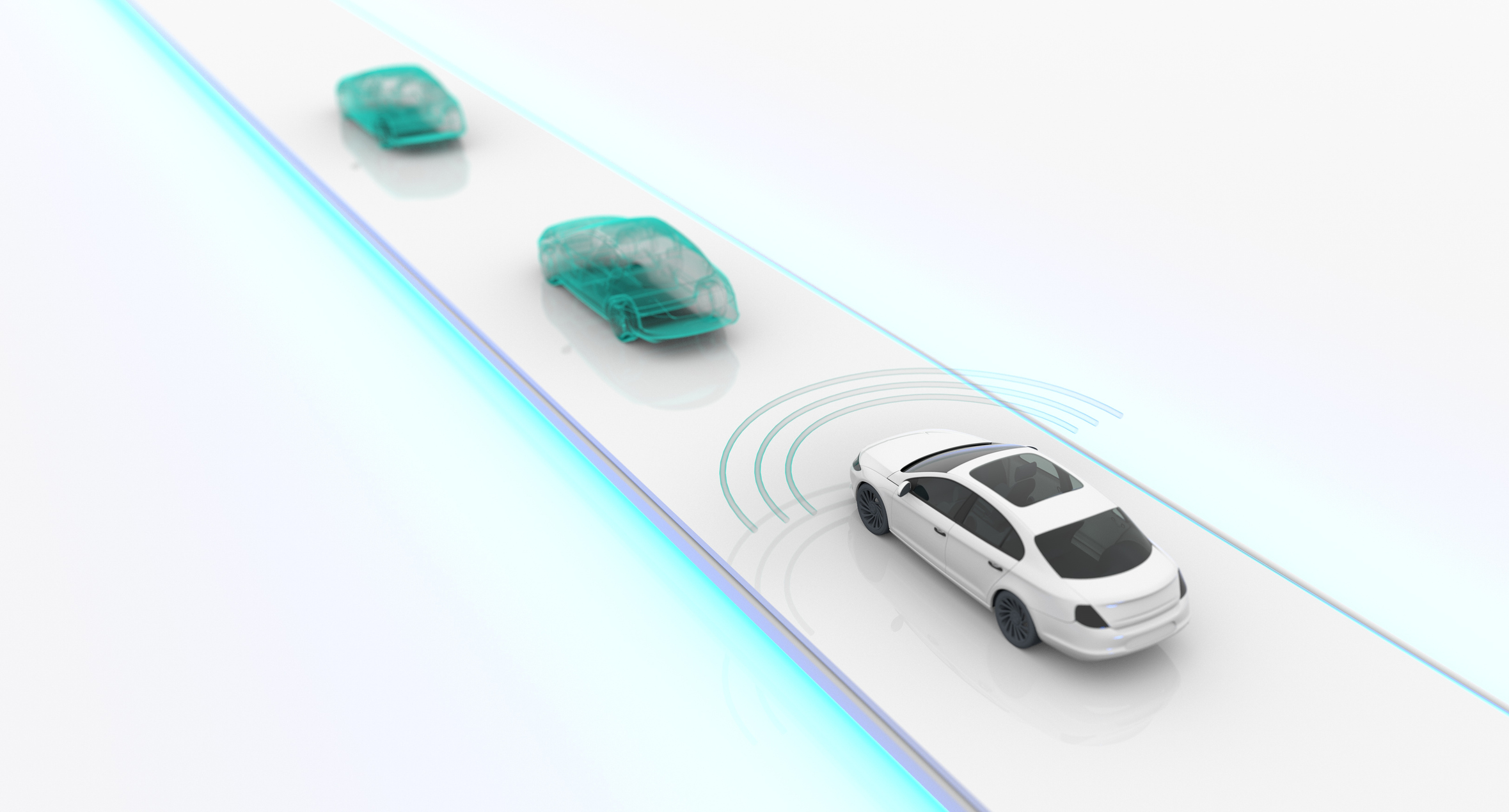
Autonomous driving relies on the seamless integration of three core processes: perception (the "eyes and ears," where in-vehicle sensors assess the surroundings),
decision-making (the "brain," where AI predicts risks and determines routes), and control (the "hands and feet," which manage steering and braking). Among these, perception is mission-critical, leaving no room for error. LiDAR serves as a highly precise "eye" for autonomous vehicles, offering capabilities that far exceed human vision.
By measuring the reflection time and frequency shifts of emitted laser beams, this sensor maps the surrounding environment in real-time 3D. This robust spatial awareness ensures safe navigation even in complex conditions, such as drastic lighting changes between day and night or environments with dense obstacles.
Leveraging ultra-precision machining technologies refined over decades, MinebeaMitsumi provides the core components that form the heart of LiDAR systems.
By combining high-frequency noise-suppression components with advanced actuators (motors) that drive the high-speed mirror rotation and oscillation needed for spatial scanning, we enable the high-precision sensing required for next-generation mobility.
Why LiDAR is Necessary: A Comparison of Key Sensors
LiDAR is critical for accurately determining precise distances to objects and rendering their 3D shapes, even in complex environments. Autonomous vehicle perception relies primarily on three main sensor technologies: cameras, millimeter-wave radar, and LiDAR. While sensor fusion—the practice of combining multiple sensors to compensate for their individual limitations—is the industry standard, LiDAR offers a distinct advantage by capturing the high-resolution 3D spatial data that other technologies struggle to resolve.
スクロールできます
|
Sensor Type |
Mechanism & Features |
Optimal Detection Targets |
Advantages |
Limitations |
|---|---|---|---|---|
| Camera | Captures visual images via optical lenses. | Traffic light colors, road signs, and lane markings. | Excels at recognizing visual cues such as lane markings, signs, and signal colors. | Performance degrades at night or in adverse weather (rain, fog, backlighting); lacks precise distance measurement capabilities. |
| Millimeter-Wave Radar | Detects objects by emitting radio waves and measuring their reflections. | Surrounding vehicles (metallic objects) and distant obstacles. | Highly reliable in adverse weather and at night; enables long-range distance and speed measurement. | Low spatial resolution makes it difficult to identify specific object shapes (e.g., pedestrians, bicycles). |
| LiDAR | Emits laser pulses and measures the scattered or reflected light. | 3D profiles of pedestrians, bicycles, and road hazards (e.g., fallen debris). | Generates high-resolution 3D point clouds for highly accurate distance and shape rendering; performs well at night. | Laser pulses can be obstructed by severe weather (dense fog, heavy snow); cost reduction and miniaturization remain ongoing industry challenges. |
What is Autonomous Driving? Definitions and Current Status of SAE Levels 0–5
Autonomous driving technology is classified into 6 levels (0 to 5) by SAE International. The turning point for next-generation mobility lies at Level 3 and above, where the primary operating responsibility shifts from the human driver to the automated system. Currently, Level 2 features, such as highway driving assist, are widely available in commercially available vehicles, while Level 3 systems, which handle driving tasks under specific conditions, are steadily entering practical use. Furthermore, global initiatives are accelerating to integrate Level 4 technologies into public infrastructure, driving the development of unmanned mobility services in designated areas and routes.
スクロールできます
|
Level |
Name |
Operating Entity |
Overview |
|---|---|---|---|
| Level 0 | No Driving Automation | Human driver | The driver performs all dynamic driving tasks (conventional manual driving). |
| Level 1 | Driver Assistance | Human driver | The system provides either longitudinal (acceleration/braking) or lateral (steering) support (e.g., adaptive cruise control). |
| Level 2 | Partial Driving Automation | Human driver | The system provides both longitudinal and lateral support simultaneously (e.g., highway lane-keeping assist). |
| Level 3 | Conditional Driving Automation | System (with human fallback) | The system manages all driving tasks under specific conditions (e.g., highway traffic jams). The human driver must promptly intervene upon system request. |
| Level 4 | High Driving Automation | System | The system fully executes all driving tasks under specific conditions (e.g., geofenced areas or fixed routes) with zero human intervention required, even during emergencies. |
| Level 5 | Full Driving Automation | System | The system fully manages all driving tasks under all conditions, without geographical or weather restrictions. |
「About Autonomous Driving Levels」
Challenges of Autonomous Driving (LiDAR)

Long-Range Detection
Wide-area coverage and long-range detection are essential for ensuring driving safety. Identifying distant hazards early and securing the critical reaction time needed to avoid obstacles, even at high speeds, are key to preventing accidents.

Quiet Operation
LiDAR systems are increasingly being integrated inside the vehicle cabin, typically behind the rearview mirror. Minimizing drive noise and vibration is essential to maintain a comfortable environment for passengers.
MinebeaMitsumi Solutions Supporting Autonomous Driving (LiDAR)
Sensors serve as the vital "eyes" of autonomous driving, and MinebeaMitsumi advances this technology through a diverse lineup built on our core precision machining capabilities. To enable advanced autonomous driving, systems must deliver long-range detection for early hazard identification while maintaining ultra-quiet operation for in-cabin installations. We solve these challenges through high-response LATMs, fluid dynamic bearing (FDB) motors that maximize quietness via non-contact rotation, and precision cartridge bearings designed to minimize shaft runout. By combining these core technologies into total system solutions, we help drive a safer autonomous future.
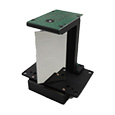
LATM
Limited Angle Torque Motor leverages high-speed responsiveness to achieve high-precision, limited-angle, and reciprocating motion.
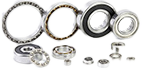
High-precision bearings ensure optimal performance of the LATM.
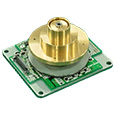
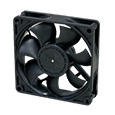
Incorporates in-house bearings to achieve exceptionally quiet operation.
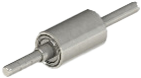
Uses high-precision cartridge bearings that suppress shaft runout and play.
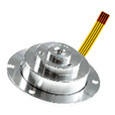
Leverages FDB technology from HDD spindle motors to achieve quiet operation through non-contact rotation.
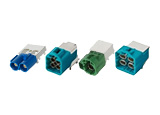
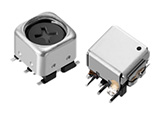
Variable transformers enable precise inductance control.
MinebeaMitsumi offers three types of actuators for LiDAR.
LATM
A proprietary next-generation actuator that delivers high-precision reciprocating motion driven by magnetic spring technology, designed to ensure low power consumption.
Brushless DC Motors
(Ball Bearing Type)
High-performance motors featuring high-resolution magnetic encoders to deliver ultra-precise detection and control.
FDB Motors
(Featuring Fluid Dynamic Bearings)
Powered by our proprietary FDB technology, these motors feature a non-contact structure that ensures an extended operational life, exceptionally quiet performance, and stable high-speed rotation, all within a low-profile footprint.
Specifications and Characteristics Comparison
*Standard motors can be customized to meet specific automotive quality requirements.
|
Item / Type |
LATM |
Brushless DC Motors |
FDB Motors |
|---|---|---|---|
|
Operation Mode |
Oscillation (limited-angle reciprocating motion) |
Continuous rotation (constant-speed control) |
Continuous rotation (stable high-speed control) |
|
Structure & Bearings |
|
|
|
|
Features |
|
|
|
Frequently Asked Questions
Why is the quality of peripheral components, such as connectors and coils, critical for the practical application of LiDAR?
How does electromagnetic noise in automotive environments impact LiDAR, and what countermeasures are required?
Contact Us
Please click the inquiry type below according to your question. Each product / sales representative will respond to you.


