
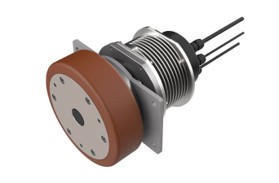
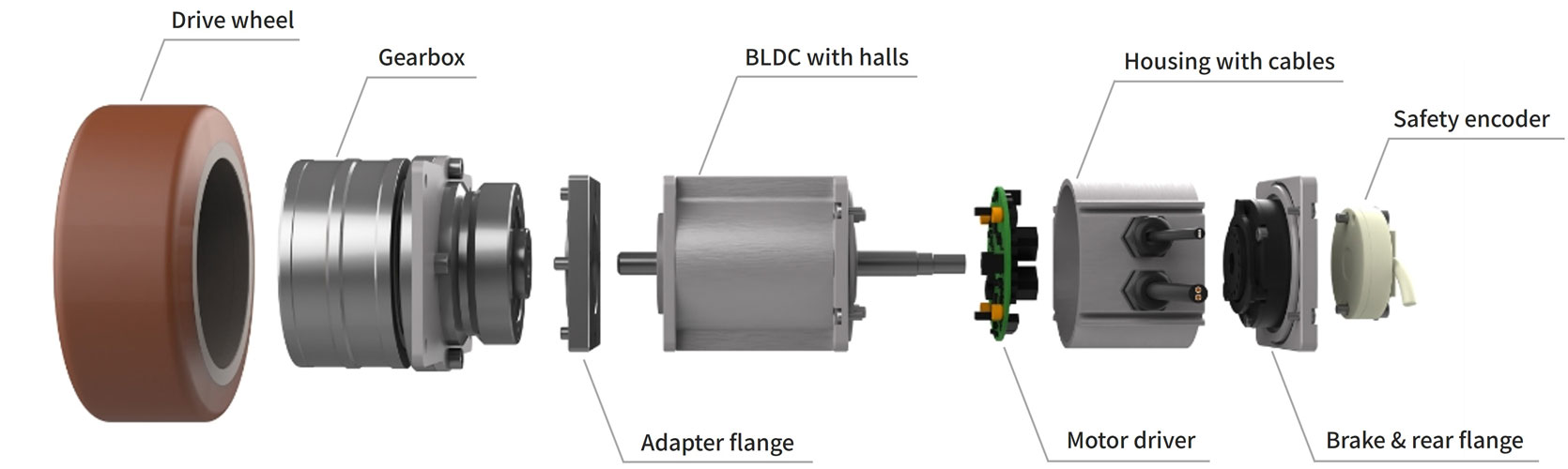
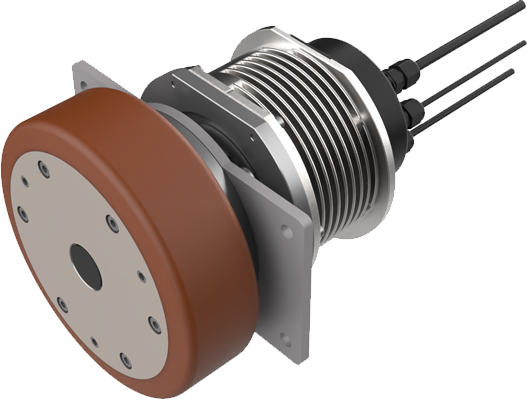
Brushless DC wheel hub motors combine a high-precision planetary gear, a powerful electric motor, a brake, and electronics, and are primarily designed for automation robots. Capable of maintaining consistent speed and rapid acceleration even under heavy loads, they are ideal for autonomous mobile robots (AMRs) and automated guided vehicles (AGVs).
This design is highly modular and can be easily customized to optimize torque, interfaces, sensors, and control profiles for each application. Standard communication interfaces, such as RS-485 and CANopen, enable efficient control of the e-Axle, which integrates a motor, inverter, and reducer.
Applications
Autonomous Mobile Robots (AMRs)
Automated Guided Vehicles (AGVs)
Industrial Transport Robots
Collaborative Mobile Robots
Material Handling Equipment
Features

Flexible customization through
modular components

Streamlined e-Axle integration
via serial communication

Smooth acceleration and
stable driving with minimal vibration under high loads
Applications
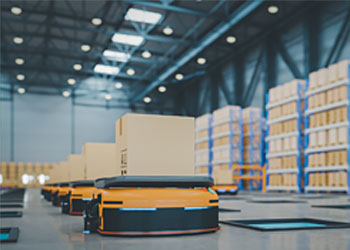
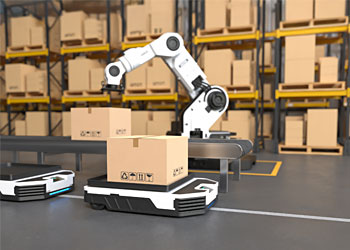
Ideal for a wide range of applications across factories, logistics warehouses, commercial spaces, and medical facilities.

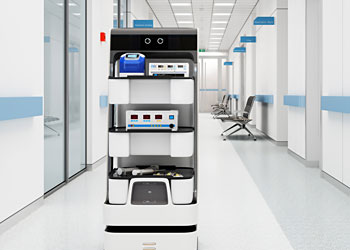
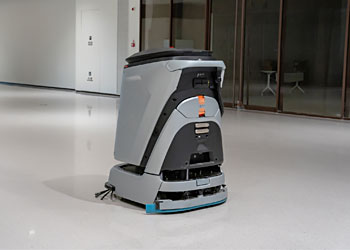
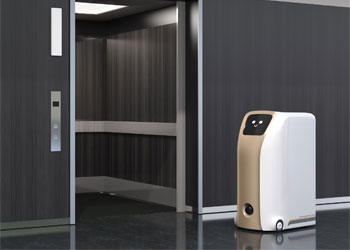
Specifications
■In-wheel motor| Rated voltage [V] | 48 | Duty cycle [%] | 100 |
|---|---|---|---|
| No-load speed [rpm] | 5400 | Direction of rotation | CW/CCW |
| Rated speed [rpm] | 4900 | Number of poles | 20 |
| Continuous power [W] | 360 | S3 duty [Nm (rpm)] | 1.4 (4,650) |
| Rated torque [Nm] | 0.7 | Max. stall torque [Nm] | 3.3 |
| Current at rated speed [A] | 9.5 | Max. stall current [A] | 35 |
| Efficiency at duty point [%] | 89 | ||
| Protection class | IP54 |
|---|---|
| Ambient temperature [°C] | 0 ~ 40 |
| Wheel diameter [mm] | 160 ~ 200 |
| Tread hardness | 92° Shore |
| Rolling resistance [N] | 65 |
| Friction coefficient | > 0.25 |
| Motor control | RS-485 (115200 Baud) / CAN |
|---|---|
| Integrated primary encoder | SPI (internal) / SSI (external) |
| Integrated secondary encoder | RS-422 (5V) |
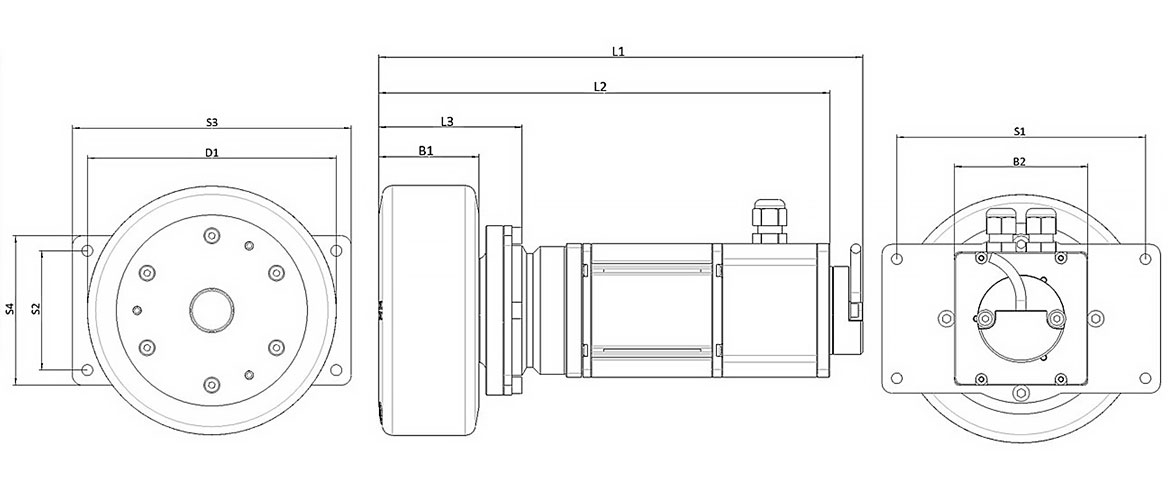
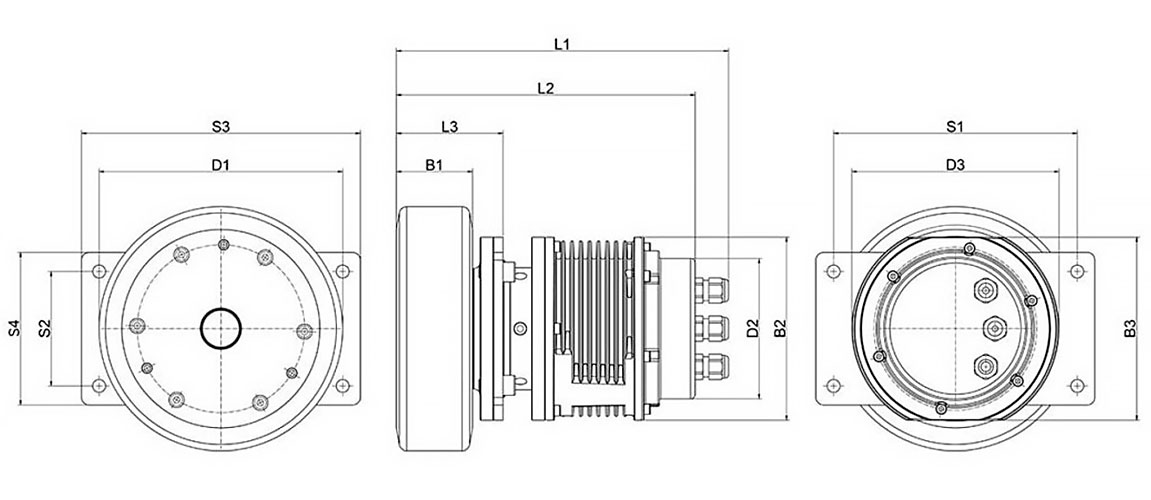
PUD65S35
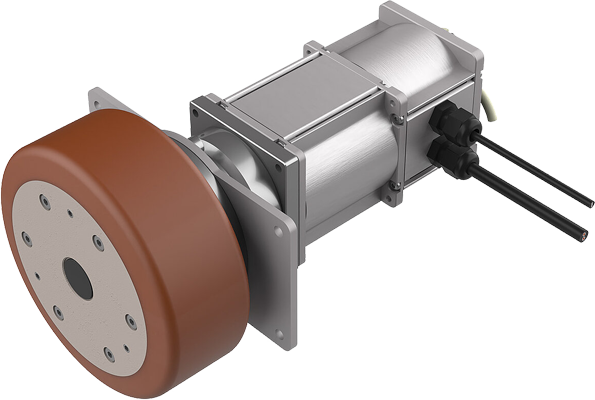
| Dimensions [mm] | 2-stage reduction (i = 16) |
|---|---|
| L1 | 241.7 |
| L2 | 225.2 |
| L3 | 66.5 |
| D1 | 125 |
| B1 | 50 |
| B2 | 67 |
| S1 | 125 |
| S2 | 60 |
| S3 | 140 |
| S4 | 75 |
| Weight [kg] | 6 |
Document Requests & Inquiries
Featured Products
Product Topics
Industry
FAQ
How much longer is the lifespan of a brushless DC motor compared to a brushed DC motor?
It is typically over 10 times longer, depending on operating conditions and brush materials.
While a brushed motor's lifespan is limited by brush/commutator friction and electrical spark wear, a brushless motor's lifespan is determined by bearing grease degradation and electronic circuit longevity. Brushed motors average 200 to 1,000 hours, whereas brushless motors can last for several thousand hours or more.
What are the disadvantages of brushless DC motors?
The primary disadvantages are higher upfront costs compared to brushed DC motors, and the need for a dedicated driver (drive circuit).
Brushless DC motors cannot operate simply by connecting a power supply directly to them. Because an IC and PCB are required to control current switching, the initial cost is higher than that of brushed DC motors.
Why do brushless DC motors require a driver circuit?
To precisely switch the direction of the coil current in sync with the rotor's position.
Unlike brushed DC motors, they lack mechanical contacts that automatically switch the current. An electronic circuit must perform this function to maintain motor rotation.
How is the rotation speed of a brushless DC motor controlled?
The rotation speed is controlled by finely switching the timing of the electrical current.
Specifically, increasing the voltage results in higher speeds, and decreasing it results in lower speeds. PWM and VSP control are the primary methods used for this speed adjustment.
What are the specific applications for brushless DC motors?
They are widely used in drones, air conditioners, refrigerator compressors, cordless vacuum cleaners, and electric vehicle (EV) drive units.
Because they lack wearing parts (brushes), they feature long service life, quiet operation, and high efficiency. These characteristics make them an essential power source for products requiring these three features.
Contact Us
Please click the inquiry type below according to your question. Each product / sales representative will respond to you.


