
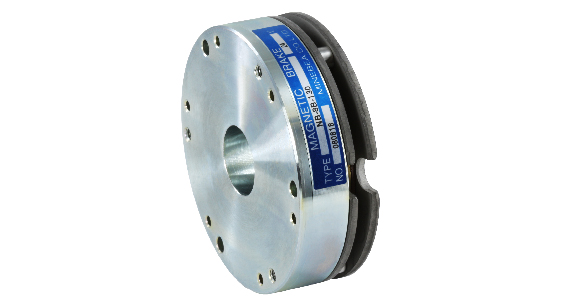
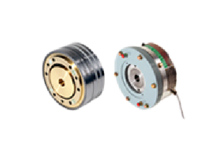
Electromagnetic clutches and brakes are control components that use electromagnetic force to instantly engage, disengage, and stop rotational power. Our lineup includes clutches to transmit power and brakes to stop and hold rotation. We offer a wide range of products, including compact tooth clutches that deliver exceptionally high torque, and spring actuated electromagnetic brakes that stop using only friction when power is disconnected.
Applications
Steel production lines
Automated parking systems
NC machine tools
Material handling systems
Cranes
Cutting machines
Belt conveyors
Testing equipment
Hydroelectric power plants
Various industrial machinery
Electromagnetic clutches and brakes Parts List
Click the arrow icon in the table below to switch from ascending to descending order.
scroll
|
Parts |
Type |
|
|---|---|---|
| EZE / EZD Type | Electromagnetic toothed clutch | |
| EZL Type | Electromagnetic toothed clutch | |
| EZR Type | Electromagnetic toothed clutch | |
| ZQS Type | Electromagnetic toothed Clutch (Spring actuated type) | |
| ZAA Type | Electromagnetic toothed Clutch | |
| ZBA Type | Electromagnetic toothed Clutch | |
| ZCA Type | Electromagnetic toothed Clutch | |
| ZDA Type | Electromagnetic toothed Clutch | |
| ZEA Type | Electromagnetic toothed Clutch (Spring actuated type) | |
| ZFA Type | Electromagnetic toothed Clutch (Spring actuated type) | |
| ZGA Type | Electromagnetic toothed Clutch (Spring actuated type) | |
| ZHA Type | Electromagnetic toothed Clutch (Spring actuated type) | |
| NAA Type | Spring actuated type electromagnetic brake | |
| NAC Type | Spring actuated type electromagnetic brake | |
| KFLM Type | Single Disc Electromagnetic Clutch / Spring actuated Brake | |
| MC Type | Dry-type Single-disc Closed Electromagnetic Clutch | |
| MB Type | Dry-type Single-disc Closed Electromagnetic Brake | |
| MCMB Type | Dry-type Single-disc Closed Electromagnetic Clutch・Brake | |
| MCO Type | Dry-type Single-disc Opened Electromagnetic Clutch | |
| MCA Type | Dry-type Single-disc Opened Electromagnetic Clutch | |
| MBO Type | Dry-typeSingle-disc Opened Electromagnetic Brake | |
| SB Type | Dry-type Single-disc Closed Electromagnetic Brake (Negative Actuated Type) | |
| TB / NB Type | Dry-type Negative Actuated type Electromagnetic Brake | |
| GR31-62 | Brush holder and brush | |
| GR05-10 | Brush holder and brush | |
| M-BR Type | Power supply equipment (built-in control contacts, over-excitation system) | |
| BG Type | Push-Up Brake |
Featured Products
Engineering Information
Technical Data
Precautions of Use
Product Topics
Industry
FAQ
What is the operating environment for electromagnetic clutches and brakes?
Standard products are designed for a temperature range of -10°C to +40°C and 20 to 80% RH (no condensation) with Class B insulation.
Operating outside these specifications can cause metal corrosion and friction material degradation, potentially preventing the product from delivering its rated torque. Exceeding the high-temperature limit also increases the risk of coil burnout and insulation failure. Maintaining the specified environmental conditions is critical to maximizing product lifespan.
Do electromagnetic clutches and brakes operate on AC power?
No, standard electromagnetic clutches and brakes operate on DC voltage.
When integrating them into AC-powered systems, a dedicated power supply must be used to convert AC to DC. DC power generates a stable magnetic field in the coil, ensuring reliable armature attraction and holding for high-precision operation.
Is there polarity in the wiring (two wires) of electromagnetic clutches and brakes?
Standard electromagnetic clutches and brakes have no polarity.
Connecting the positive (+) and negative (-) lead wires to either terminal does not affect the electromagnetic attraction or operating characteristics. This simplifies wiring during installation and reduces the risk of connection errors. However, please observe the correct polarity if installing surge-absorbing diodes in the control circuit.
What is the allowable fluctuation range for the supply voltage?
For stable operation, keep the supply voltage within ±10% of the product's rated voltage.
Low voltage generates insufficient magnetic force, causing slipping, premature wear of the friction material, and reduced torque output. Conversely, excessive voltage causes coil heating beyond the allowable limit, risking open circuits and insulation degradation. Proper voltage management is essential for a reliable response and a long service life.
Can they be mounted with a vertical shaft?
To maintain optimal performance, standard electromagnetic clutches and brakes must be installed with a horizontal shaft
Vertical mounting causes the armature to move unevenly due to gravity. This leads to dragging during release (increased drag torque) and uneven wear of the friction material. We strongly recommend a horizontal shaft design to ensure uniform load distribution, which guarantees stable responsiveness and durability.
Is asbestos used in the friction material of electromagnetic clutches and brakes?
No, all MinebeaMitsumi electromagnetic clutches and brakes use completely asbestos-free friction materials.
We prioritize reducing our environmental impact and ensuring worker health and safety by utilizing eco-friendly friction materials that contain no harmful asbestos.
Can tooth-type electromagnetic clutches be engaged during rotation? Is it necessary to reduce the load or RPM when disengaging?
Engagement must only occur when the shaft is completely stopped. However, disengagement is possible even at maximum RPM and maximum torque.
Unlike friction types, tooth clutches transmit power by interlocking metal teeth. Engaging the clutch while rotating causes the teeth to clash, leading to immediate damage. Therefore, engagement requires zero relative speed between the input and output shafts. Conversely, they offer the advantage of instant disengagement, even under maximum operating loads.
Contact Us
Please click the inquiry type below according to your question. Each product / sales representative will respond to you.


