
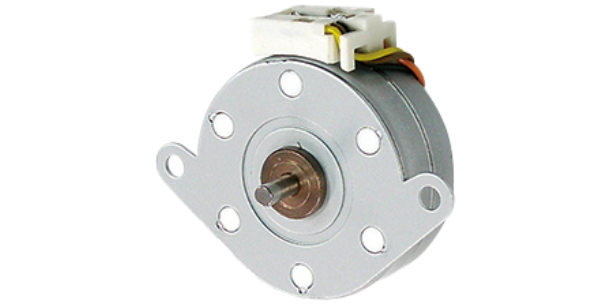
PM stepping motors rotate at fixed angles driven by pulse signals and feature a permanent magnet (PM) rotor. They are primarily used in the paper feed and carriage mechanisms of office equipment such as printers and copiers.
MinebeaMitsumi's PM stepping motor portfolio ranges from standard designs to ultra-compact versions starting at just φ3.4 mm, alongside linear and gearbox-equipped models. We also provide custom-engineered solutions tailored to your specific applications. Please refer to the "Custom Guide" for details.
To support your product selection and design process, various resources, such as CAD models and datasheets detailing product features and applications, are available for download.
Applications
Office Equipment
Automotive Optical Axis Adjustment
Housing Equipment
Surveillance Cameras
Digital Cameras
Drones
Medical Syringe Pumps
Specimen Testing Equipment
Sewing Machines
ATMs
Home Appliances
Smartphones
Download
Product List
-
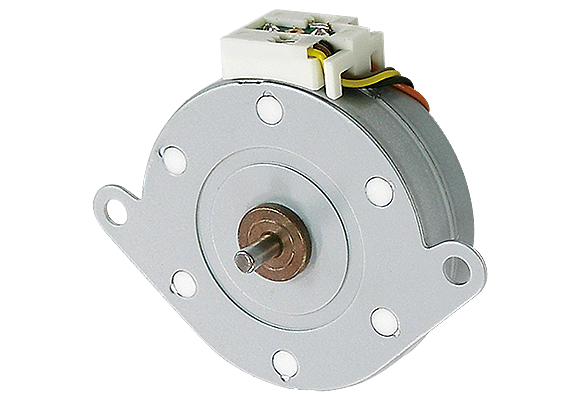
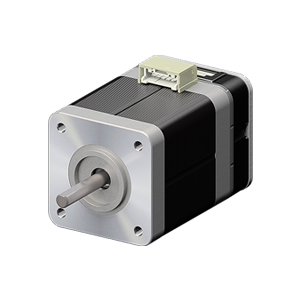
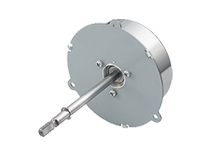
Standard type
Standard PM stepping motor series.
-
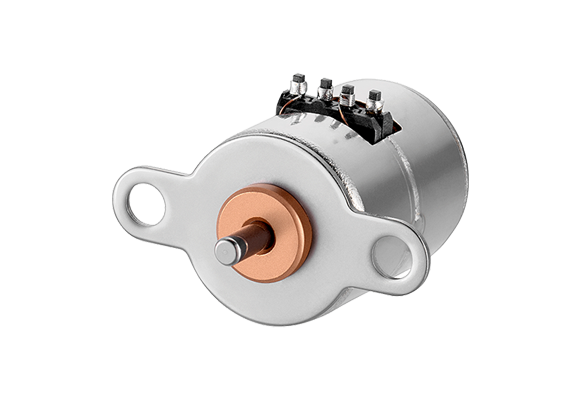
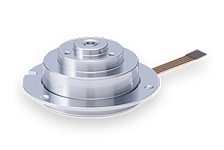
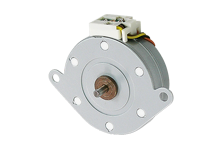
Small diameter type
Small-diameter PM stepping motors, from Φ3.4mm to 10mm. Ideal for cameras.
-
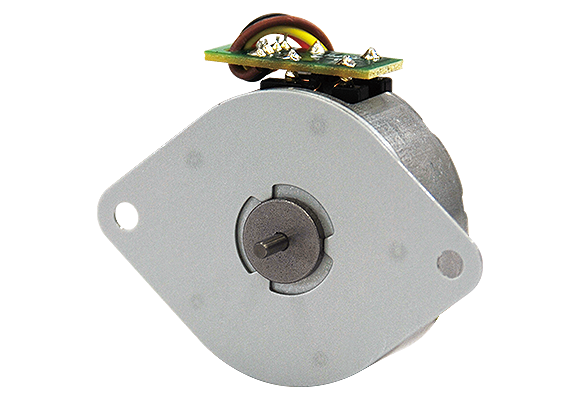
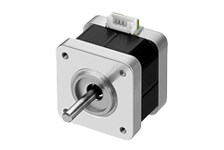
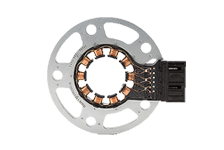
High speed type
High-speed, high-torque stepper featuring a silicon steel stator and bonded neodymium magnet rotor.
-
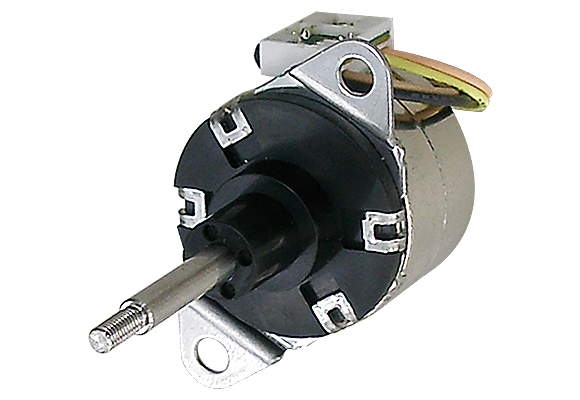
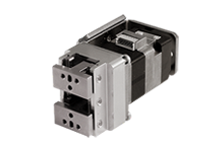
Linear type
PM stepper that converts rotary motion into linear motion, achieving high thrust in a compact size.
-
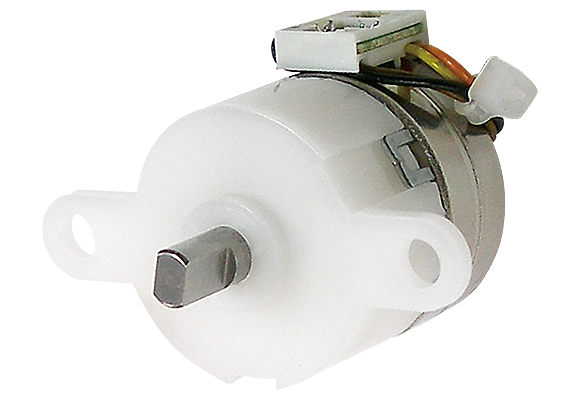
With Gearbox
Geared PM stepping motor featuring a paradox planetary gear system.
Custom
Featured Products
Engineering Information
Technical Data
Precautions of Use
Explanation of Technical Terms
Case Studies
Product Topics
Industry
FAQ
How can I achieve higher torque with a PM stepping motor?
To achieve higher torque, consider models equipped with a gearbox, such as planetary gears, or types utilizing strong neodymium magnets.
Gearbox-equipped models can output significant torque depending on the reduction ratio. Additionally, high-speed types combining a bonded neodymium magnet and a silicon steel stator deliver high torque and responsiveness despite their compact size.
Why can PM stepping motors be designed so thin?
Their simple structure allows for a shorter axial length.
While hybrid stepping motors feature a complex three-dimensional structure sandwiching a magnet between two gear-shaped iron cores, PM types consist of a cylindrical magnet and a sheet metal frame. This facilitates a thinner profile, and we offer a lineup of thin models under 15 mm. For compact motors with an outer diameter of 10 mm or less, we also offer products under 5 mm in length.
I want to run a PM stepping motor at maximum speed, but the torque drops abruptly and it stops. What is the cause?
This sudden torque drop-off is a fundamental physical limitation caused by back electromotive force (back EMF) and coil inductance, which restrict current flow at higher speeds.
As the motor’s speed increases, the motor acts like a generator, producing a reverse voltage. Overcoming this back EMF to drive current requires a higher driver power supply voltage.
Which is better for a PM stepping motor: unipolar or bipolar?
Bipolar drive is generally recommended because of its superior torque efficiency, delivering the required force in a smaller footprint.
While unipolar circuits are simpler to implement, they are less efficient as they only energize half of the coil at a time. In contrast, bipolar drives utilize the entire coil, generating substantial torque even with limited battery voltage or compact motor sizes.
Where are the production facilities for PM stepping motors?
As of June 2026, our PM stepping motors are produced at our Lopburi plant (Thailand), Phnom Penh plant (Cambodia), Kaohsiung plant (Taiwan), Cebu plant (Philippines), and Korea plant.
This distributed, multi-site production network ensures a highly stable supply chain and supports strong Business Continuity Planning (BCP) measures for our customers.
What are the advantages and disadvantages of stepping motors?
What is a stall, and why does it occur?
What is the lifespan of a stepping motor?
Contact Us
Please click the inquiry type below according to your question. Each product / sales representative will respond to you.


