
Comparing PM and Hybrid Stepping Motors| Structural Basics for Selection and Use
What is a stepping motor?
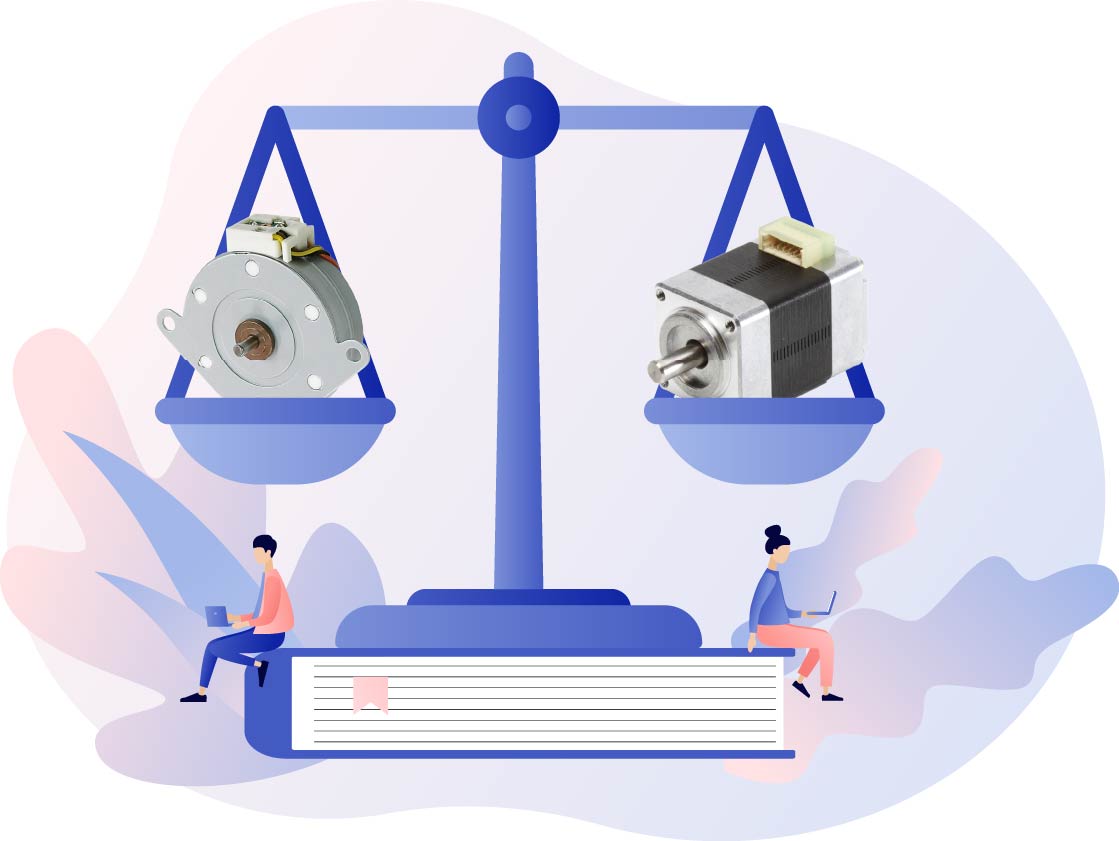
While most motors rotate continuously, stepping motors rotate in precise, fixed increments—much like the second hand of a clock. Their primary advantage is the ability to achieve accurate positioning using pulse signals without requiring feedback devices such as encoders (open-loop control). For this reason, they are frequently referred to as "pulse motors.“ Of the three main types of stepper motors, Permanent Magnet (PM) and hybrid models are the most widely used in the industry today. This article explains the fundamentals of PM and hybrid stepper motors, covering everything from their structural differences to how to select the right motor for your application.
- Clearly understand the differences between PM and hybrid stepping motors based on their internal structures.
- Select the optimal motor type for your specific application requirements.
1. Stepping motor types and differences between PM and hybrid types
Based on their internal rotor structure, stepping motors fall into three main categories: PM, Variable Reluctance (VR), and hybrid. While VR motors offer precise rotation control comparable to hybrid types, they suffer from weak torque and zero holding power when powered down. Because hybrid motors overcame these weaknesses to become the widely adopted standard, VR motors are rarely used today.
-
PM type (Permanent Magnet)
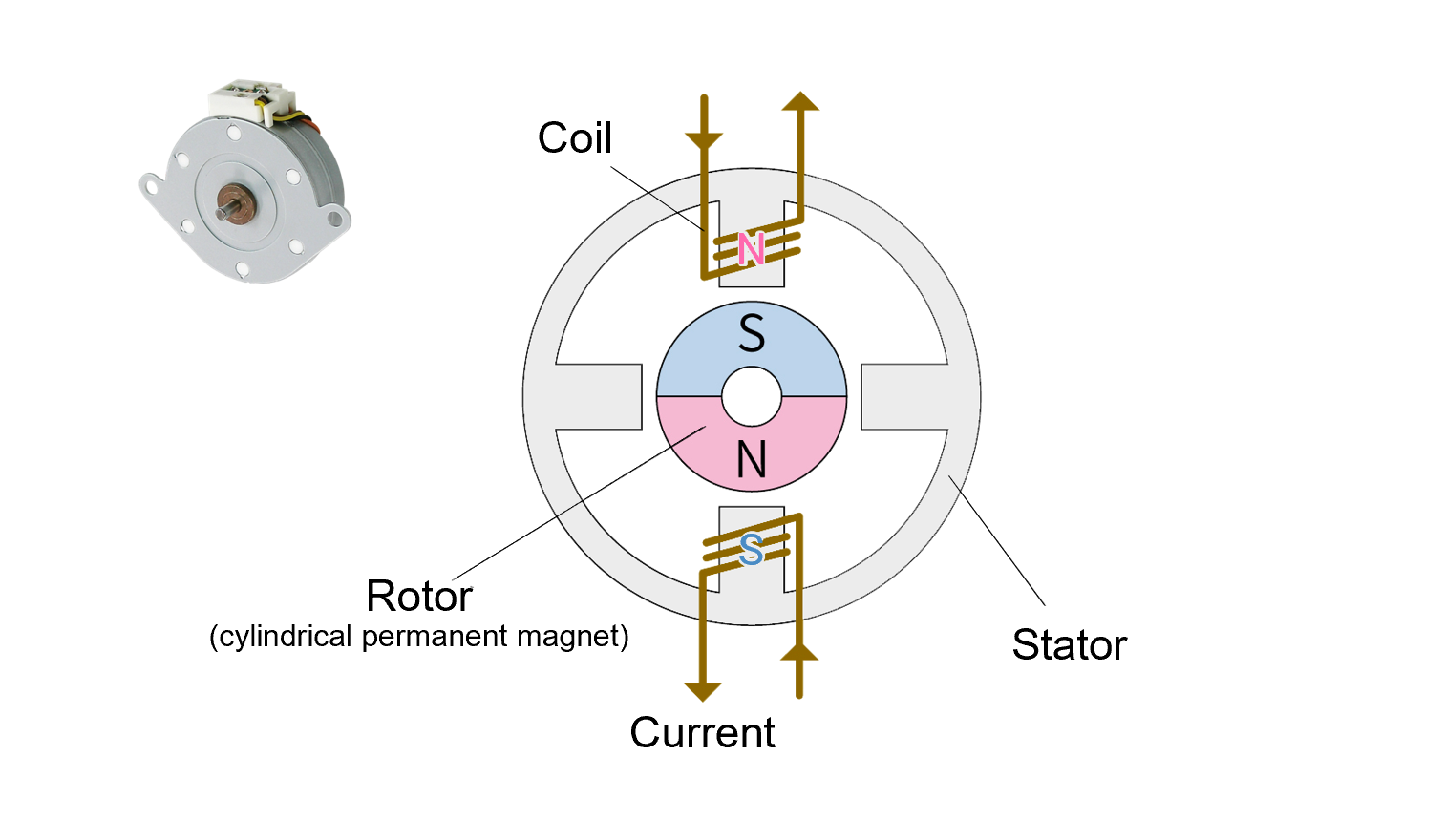
- A simple structure utilizing a cylindrical permanent magnet for the rotor (motor shaft).
Operating principle
Rotates via the attractive and repulsive forces (N/S poles) between the magnetic field generated by the stator (coil) and the rotor's permanent magnet.
Advantages
Fewer components facilitate miniaturization and cost reduction in mass production.
Disadvantages
Physical limitations in forming fine magnetic poles on the surface result in coarse step angles (e.g., 7.5° or 15°)
👉 Step angle : The angle the motor rotates per electrical pulse. -
Hybrid type
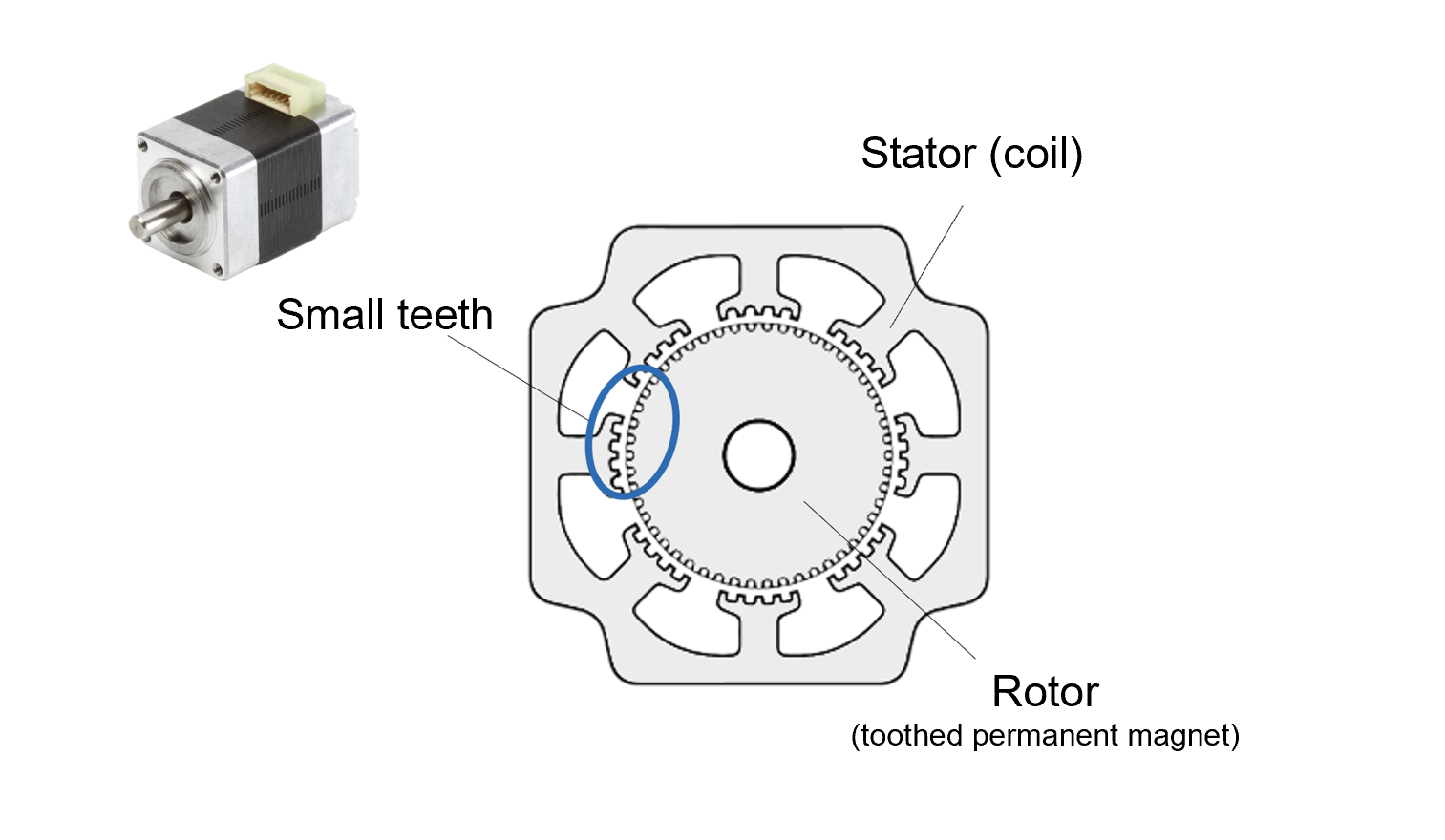
- A hybrid structure combining a permanent magnet (PM) with a variable reluctance (VR) toothed iron core.
Operating principle
A permanent magnet is sandwiched between two finely toothed iron cores. The motor rotates as the teeth of the stator and rotor magnetically align and attract one another.
Advantages
The high tooth count allows for fine step angles (typically 0.9° or 1.8°), delivering a combination of high precision and high torque.
Disadvantages
The requirement for high-precision machining and complex assembly generally makes these motors more expensive than standard PM types.
Characteristics comparison: PM vs. hybrid stepping motors
スクロールできます
|
Feature |
PM Type |
Hybrid Type |
|---|---|---|
| Step Angle (Resolution) | Coarse (e.g., 7.5°, 15°, 18°) | Fine (e.g., 0.9°, 1.8°) |
| Positioning Accuracy | Moderate | Excellent |
| Output Torque | Low to medium | High |
| Cost | Relatively low (Simple construction) | Relatively high (Requires precision machining) |
| Applications | Printer paper feeds, air conditioner louvers, camera auto-focus (AF) |
Valve actuation, robotic grippers, locking mechanisms in semiconductor equipment |
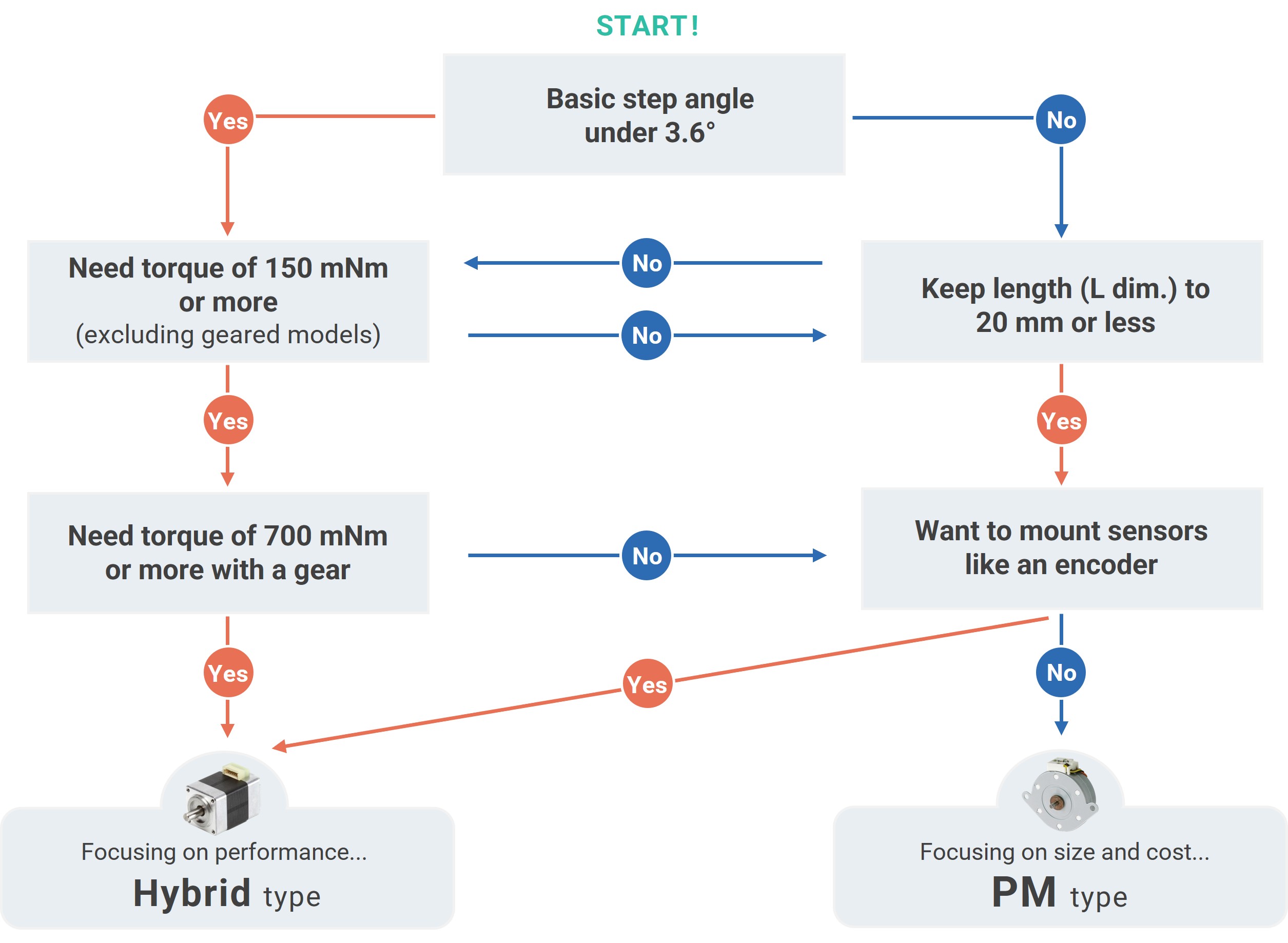
2. Select the optimal stepping motor using the Yes/No chart
Answer the Yes/No questions to find the best stepping motor for your needs. The ideal product varies depending on the application and operating environment. For a more precise selection, please contact us.
3. Stepping motor glossary
A summary of common technical terms used for stepping motors.
4. FAQ
What are the advantages and disadvantages of stepping motors?
What is a stall, and why does it occur?
What is the lifespan of a stepping motor?
For document requests and inquiries regarding stepping motors
Related Page
Contact Us
Please click the inquiry type below according to your question. Each product / sales representative will respond to you.


