
- Hybrid stepping motors
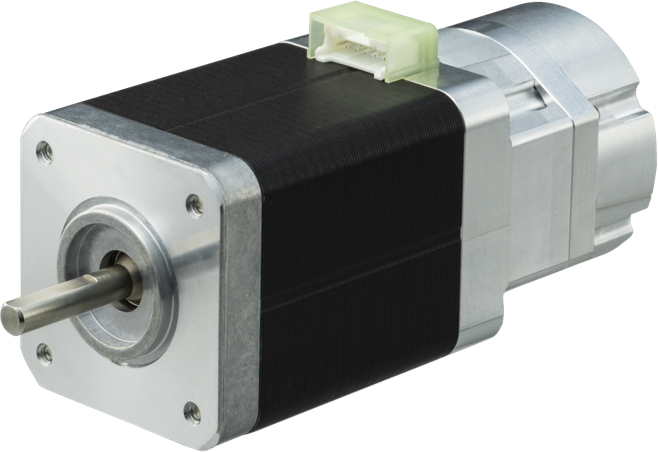
Prevent shaft rotation during power-off with an electromagnetic brake-equipped stepping motor
Case study
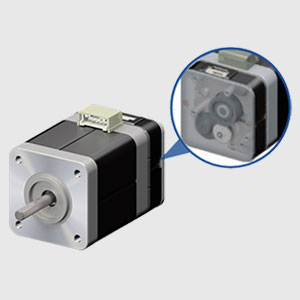
Stepping motor with brake
Prevent shaft rotation during power-off
with an electromagnetic brake-equipped stepping motor
Problem
In material handling equipment, if an external force is applied while the power is off, the motor rotates unintentionally, causing misalignment.
Solution
A power-off activated electromagnetic brake mounted on the stepping motor physically locks the shaft, preventing rotation during power loss.
Benefits
- Prevents unintended misalignment while the motor is stopped with the power off.
- Prevents equipment failure caused by unintended misalignment.
- Reduces the number of parts with an integrated brake design.
"Backdriving": unintended motor rotation in a power-off state
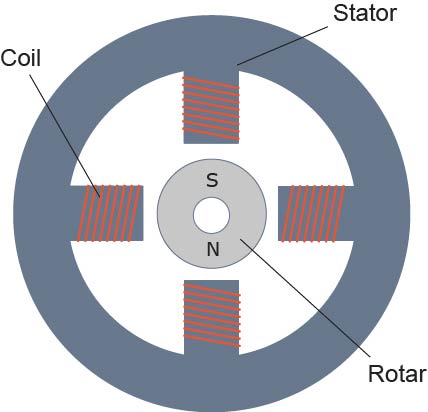
A magnetic field is generated when current flows through the stator coils
Stopping rotation with an electromagnetic brake
To ensure the shaft stops securely even during a sudden power loss, some motors feature an integrated electromagnetic brake. MinebeaMitsumi's electromagnetic brake-equipped models utilize a power-off activated design. This means the brake engages when the power is disconnected.
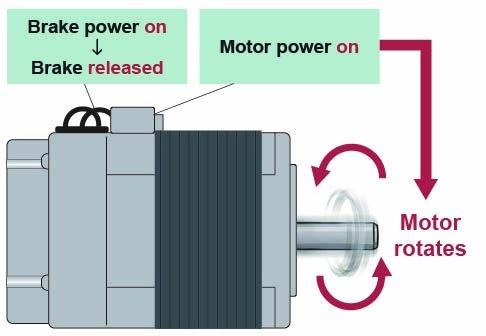
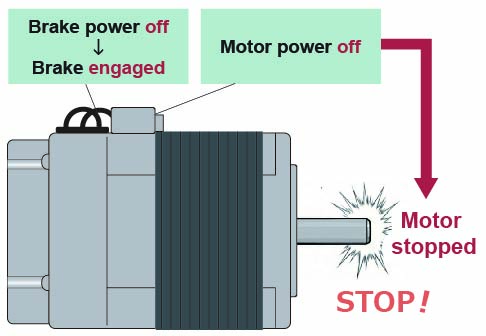
When the brake engages, the force of an internal spring physically locks the motor's rotation shaft, stopping any movement. When current is applied, an electromagnetic force is generated that overcomes the spring force, unlocking the shaft and allowing the motor to rotate.
While the word "brake" often brings to mind a dynamic brake used to decelerate moving objects, this electromagnetic brake is a holding brake designed to keep stationary objects securely in place. It is ideal for applications requiring load holding during power-off states.
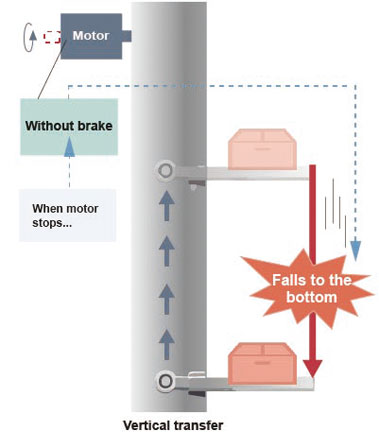
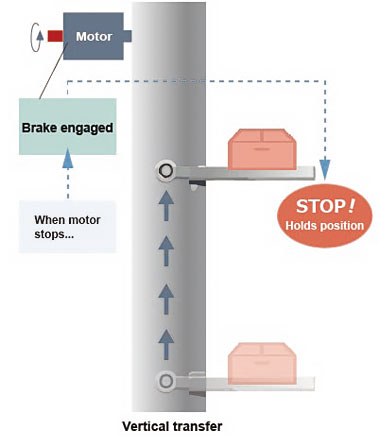
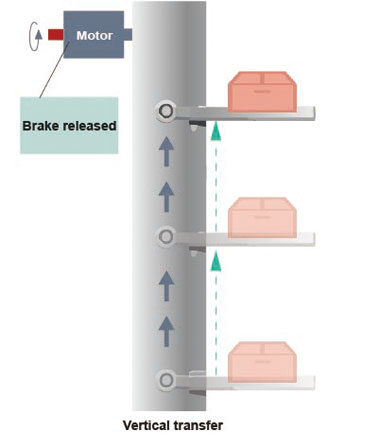
♦ Vertical transport equipment: with and without an electromagnetic brake during power loss
- Motor without brake
- during power loss
Without a brake, a loss of current means losing holding torque, causing the transported load to fall.
- Motor with brake
- during power loss
A brake-equipped motor holds its position even when current is lost, preventing the load from falling.
- Motor with brake
- Normal operation
During normal operation, the brake is released, allowing vertical load transport.
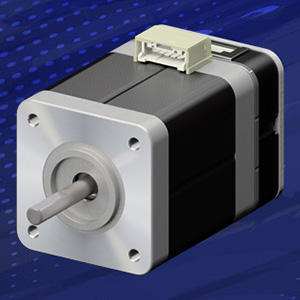
Our stepping motors featuring an integrated brake help decrease the total number of parts and save space.
Please feel free to contact us regarding small-lot orders and customizations.
Related page
回転機器の導入事例
Contact Us
Please click the inquiry type below according to your question. Each product / sales representative will respond to you.


