
- Hybrid stepping motors
Case Studies about Hybrid Stepping Motors with Battery-less Absolute Encoders -Semiconductor Manufacturing Equipment-
Low-profile, High-resolution
Hybrid Stepping Motors with
Battery-less Absolute Encoders
Case Studies about Hybrid Stepping Motors
Manufacturing Equipment
Eliminate home sensors with our proprietary magnetic encoder, reducing cycle times.
Product
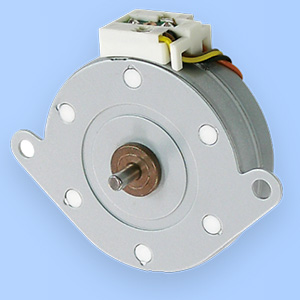
M Series: Stepping motor with battery-less absolute encoder
Features
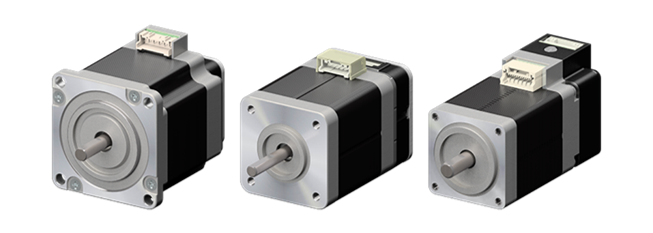
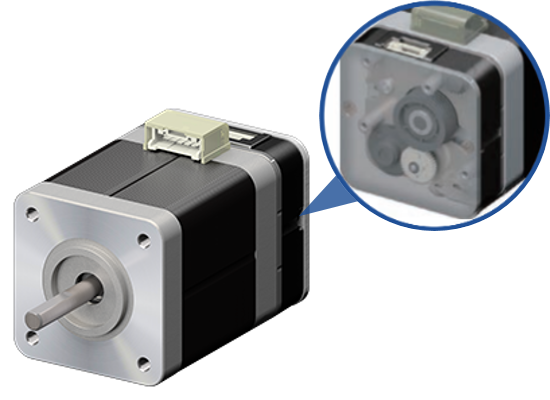
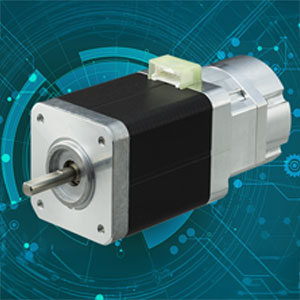
This model features a hybrid stepper motor equipped with a battery-less absolute encoder, utilizing a unique sensor mechanism to achieve an ultra-thin profile.
By applying the principle of an analog clock, this model retains current position data during a power loss, even without a backup power supply. The motor can resume operations after an emergency stop without a return-to-origin run, which eliminates the need for home and limit sensors, contributing to shorter cycle times.
Case study about semiconductor manufacturing equipment
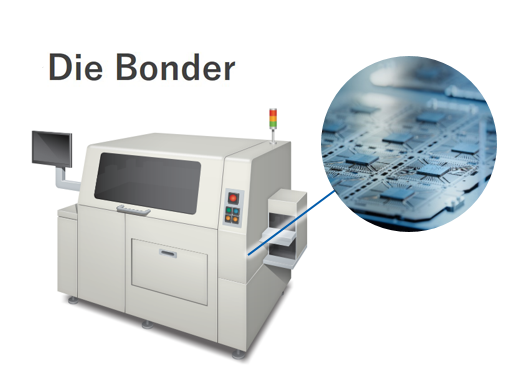
As networking, electrification, and automation continue to advance, semiconductor manufacturing equipment is required to deliver higher precision, larger production volumes, and greater reliability.
In particular, die bonders—which are used in the back-end process to bond semiconductor chips like ICs and LSIs—demand extremely accurate positioning. Using the die bonder as an example, this article explores how our hybrid stepper motor, equipped with a battery-less absolute encoder, solves engineering challenges.
Problem
Slow restart after errors reduces production efficiency.
Application
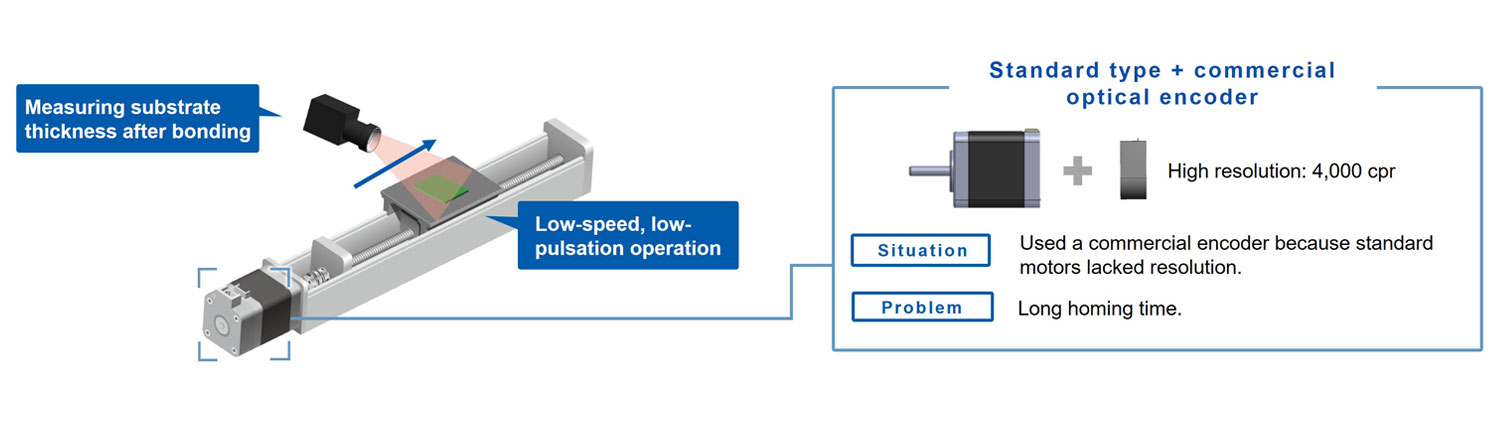
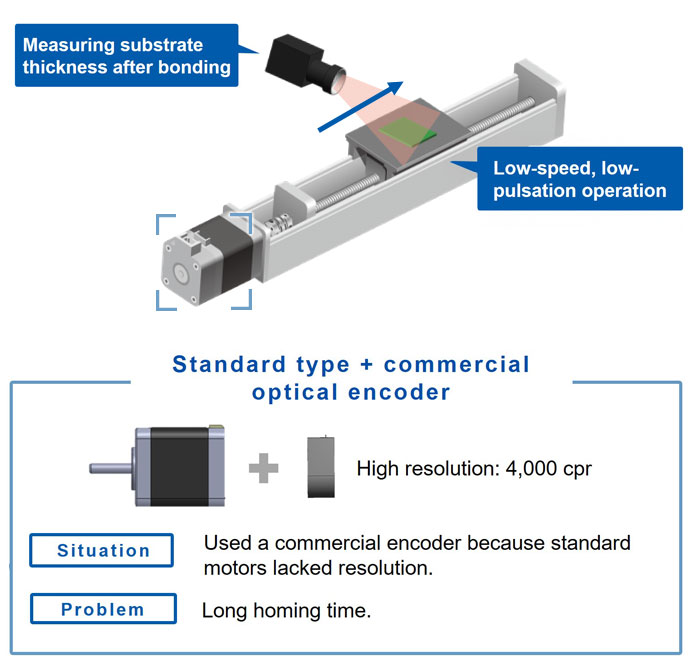
PCB thickness measurement
Problem and challenge
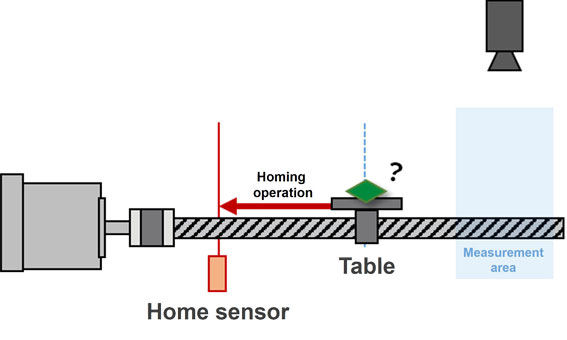
Although a standard hybrid stepping motor is equipped with a commercial optical encoder, the current table position will be lost if motor power is interrupted by errors. In this situation, a homing operation is required to resume operation.
The time required for the table to return to the home sensor causes a time loss, increasing the cycle time.
Solution and result
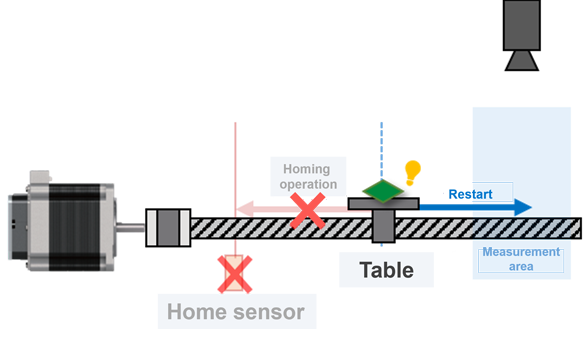
By replacing the previous motor with a stepping motor equipped with a battery-less absolute encoder, the current position is mechanically retained even if the power is interrupted. Once power is restored, the current position is detected via absolute output, enabling a restart without a homing operation.
Problem
Stop position deviates due to component aging, which requires gripping position adjustments.
Application
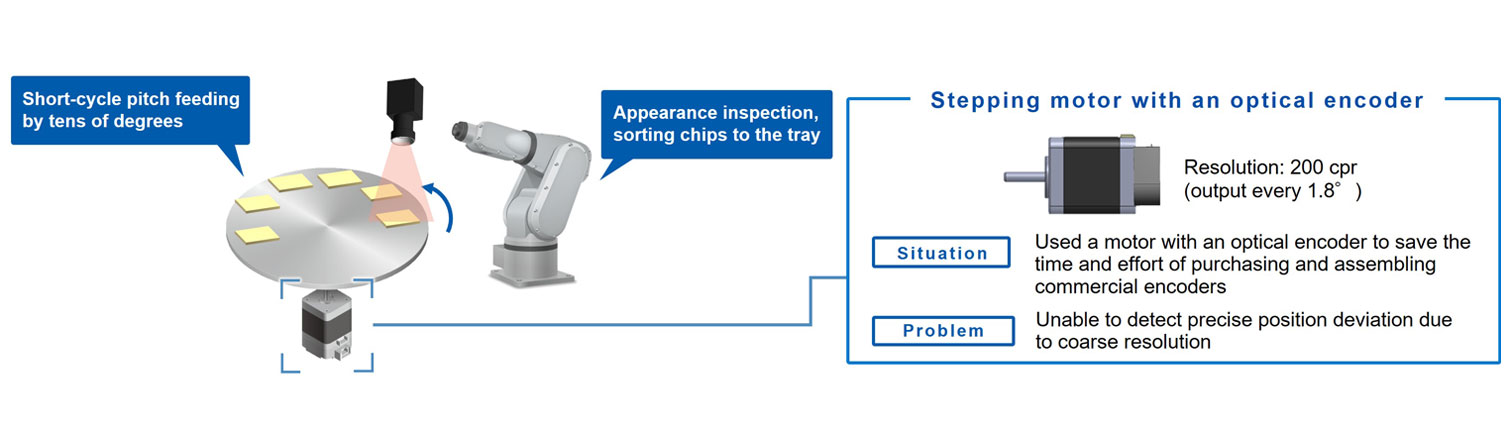
IC pick-up table drive
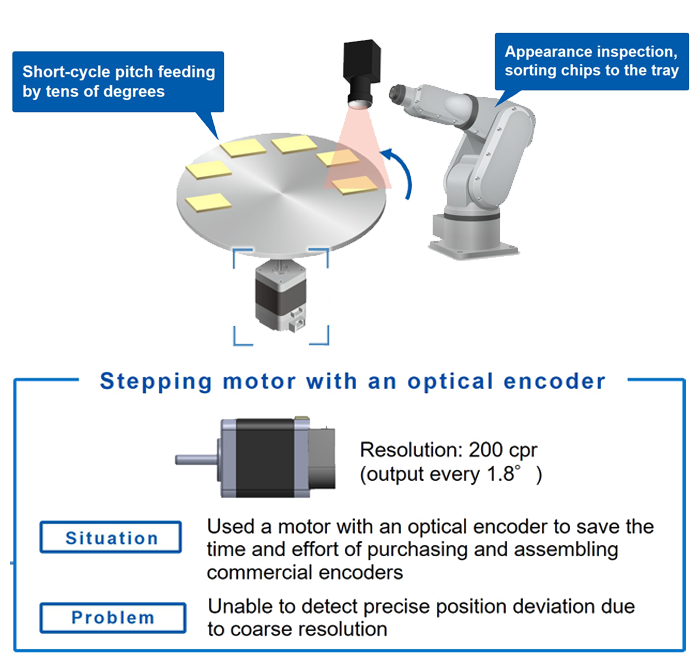
Problem and challenge
A stepping motor equipped with a 200 cpr optical encoder was used, but it could not detect slight stop position deviations because of the aging of mechanical parts, such as bearings in the table drive. In this situation, adjustments to the gripping position are required.
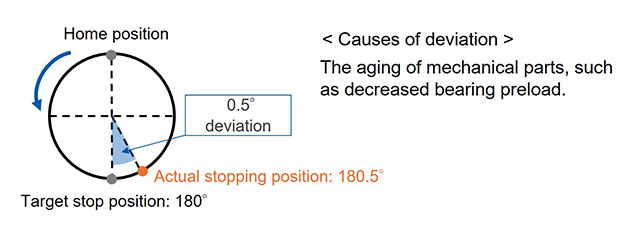
Solution and result
A stepping motor equipped with a high-resolution, battery-less absolute encoder enables early detection of slight position deviations. This reduces cycle time losses from position adjustments and enables proactive equipment maintenance.

Problem
The use of multiple sensors complicates the control system.
Application
Magazine transfer drive
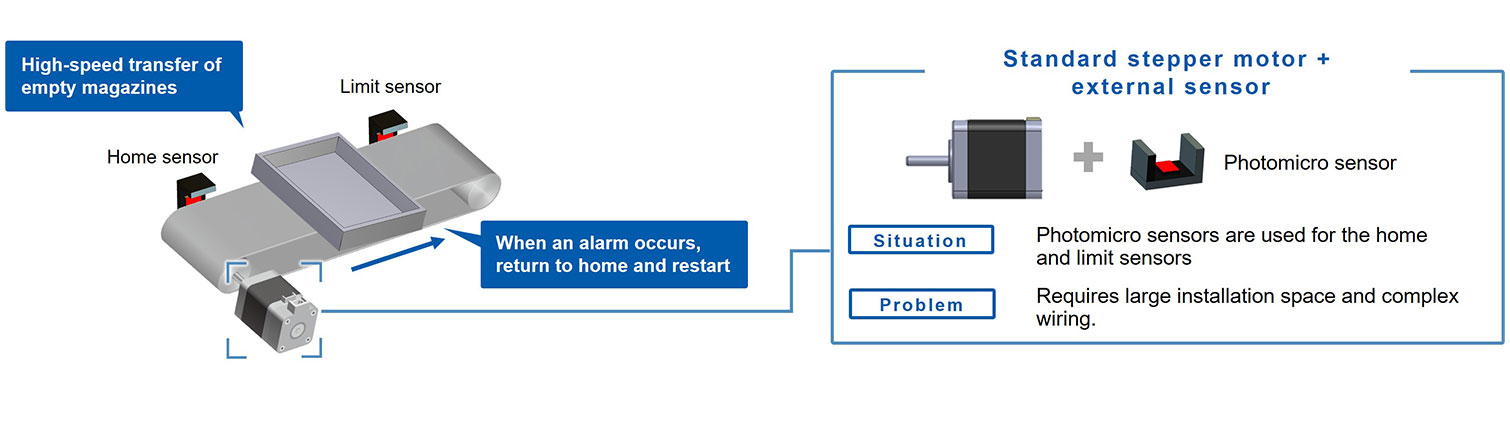
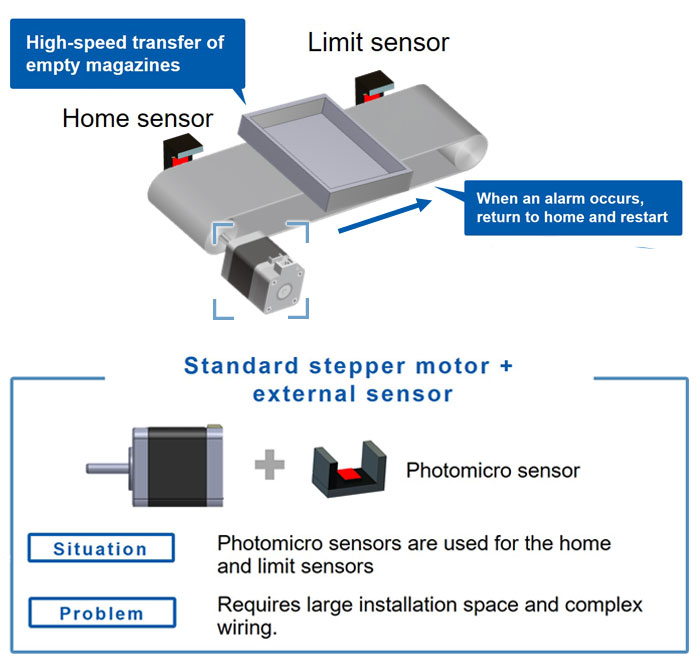
Problem and challenge
The use of multiple sensors for positioning control, such as home and limit sensors, increased the component count. Furthermore, a mix of motor wiring routed through the driver and sensor wiring connected directly to the master board complicated the system configuration.
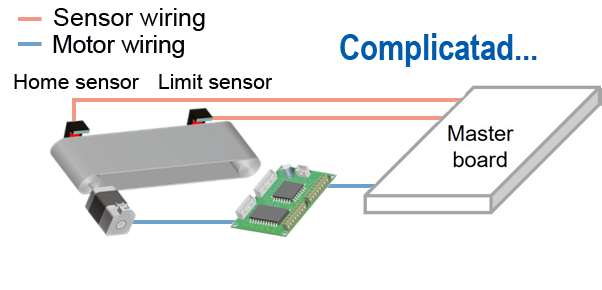
Solution and result
A stepping motor equipped with a battery-less absolute encoder can retain the current position even when unpowered, allowing positioning control to be completed solely by the motor. This eliminates the need for home and limit sensors, simplifying system configuration.
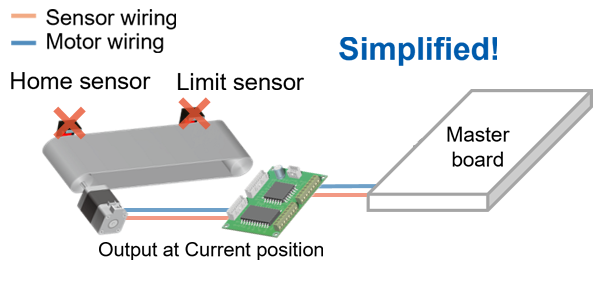
Related page
Product information
Battery-less Absolute Encoder type
Encoder type
PM stepping motors
Hybrid stepping motors
Technical information
Choice of Coil Extension Method
Calculations and Factors
Resistance Value
Magnet
Rotary components case studies
Contact Us
Please click the inquiry type below according to your question. Each product / sales representative will respond to you.


